Technical Information of Scientific GlasswaresBorosilicate glass represents unmatched standardized glass for construction of plant and piping in the chemical, dyestuff, food, pharmaceutical, petrochemical industries. Its steadily growing use is due to many advantages over conventional materials.
The chemical and physical properties of any glass depends on a varying degree on chemical composition of glass. CHEMICAL COMPOSITIONSiO2 - 80.6% B2 O2 - 12.5% Na2O - 4.5% Al2 O3 - 2.2% RESISTANCE TO CHEMICALSUnder actual operating conditions, the effect of turbulence, and traces of other chemicals in the solution may increase or decrease the rate of attack. So it is not possible to give exact figures for corrosion by caustic solutions. PHYSICAL AND THERMAL PROPERTIESThe coefficient of thermal expansion of borosilicate glass over the temperature 0-300° C is 3.3 x 10⁻⁶/°C. This is very low when compared with other glasses and metals. That is why, borosilicate glass is often called low expansion borosilicate glass. Specific heat Specific heat between 25° C and 300° C is average to be 0.233Kcal/Kg,°C. Thermal Conductivity Thermal conductivity is 1.0 Kcal/hr.m°C. over the permissible operating temperature range. Mean Specific Heat Mean specific heat capacity between 20°C and 200°C is 0.98 KJ/Kg K. DENSITY
Density of glass at 20°C (J)=2.23g/ccModulus of elasticity (E)=6.3 KN/mm2 Poissions ratio=0.2 ANNEALING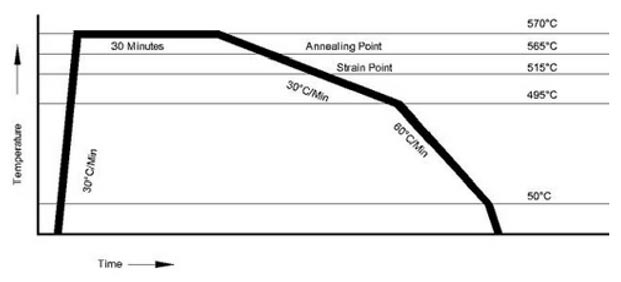 RESHAPING
MECHANICAL PROPERTIESOPTICAL PROPERTIESPERMISSIBLEOPERATING CONDITIONSThe permissible internal operation pressure depends on the nominal diameter of the glass components and on working temperature. In case of unit various combination like vessels, filters, heat exchangers, the over all permissible internal gauge pressure is always governed by the components with the lowest permissible operating gauge pressure. All components are suitable for full vacuum. Bar is a measure of absolute pressure. The figure given for maximum recommended working pressure represents pressure above atmospheric. 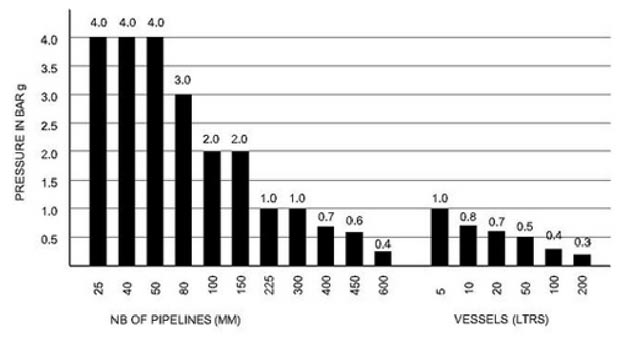 Working TemperatureBorosilicate glass retains its mechanical strength and will deform only at temperature which approach its strain point. The practical upper limit for operating temperature is much lower and is controlled by the temperature differentials in the glass which depends on the relative temperature of the contents of the equipment and the external surroundings. Provided borosilicate glass is not subject to rapid change in temperature, creating undue thermal shock, it can be operated safety at temperatures upto 250° C.It must be realized that in complete plants, composed not only of borosilicate glass, but also including other materials such as PTFE. The recommend max. operating temperature is 200°C, Operating temperatures may have to be modified so as to compensate for the effects of other factors such as pressure, thermal cycling, rapid heating & cooling etc. The degree of thermal shock (usually defined as sudden chilling or heating) which it can withstand depends on many factors such as stresses due to operating conditions, stresses imposed in supporting the equipment, the wall thickness of the glass. It is therefore undesirable to give sudden temperature changes. But up to 120° C can be accommodated. At sub zero temperature, the tensile strength of borosilicate glass tends to increase and equipment can be used with safety at temperatures as low as -50°C for Xtrong end components. ELECTRICAL CHARASTERISTICSThe dielectric coefficient varies with current frequency. COMPOSITE MATERIALSThe combination of different corrosion resistant materials with the utilization of the specific advantages of each permits both safe and economic construction. Borosilicate glass/PTFEBorosilicate glass with PTFE is of particularly decisive importance for construction of glass installation for example. In seals, bellows, stirrers, pumps, heat exchangers, column inserts etc.PTFE is used in above because of its excellent mechanical & thermal properties. They have near universal fluid compatibility. Wear life when compared with others is very low. Particularly PTFE is maintenance free and have cryogenic stability with non wetting property. Service temperature of PTFE is considered as -50°C to +200° C. TIGHTENING TORQUE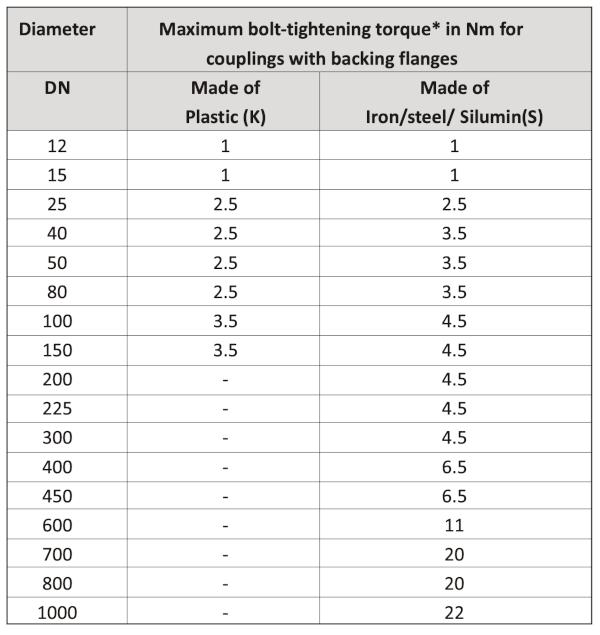 *The Indicated Tightening torques apply for ungreased bolts and are required only for the maximum operating pressures. They can be reduced. Contact UsShiva Scientific Glass Pvt. Ltd.Gujarat Office & WorksVadodara - 390010 (Gujarat) Mobile & Whatsapp: +91 9289985023 ✉ baroda@shivascientificindia.com, boro.scientific@gmail.com Delhi Office & WorksPaschim Vihar New Delhi-110087 Mobile & Whatsapp: +91 9810185023, 9810185024 ✉ delhi@shivascientificindia.com Export Office & ShowroomPaschim Vihar New Delhi – 110087 Mob.: +91 9810185023 & 9289985023 ✉ export@shivascientificindia.com, borog65@yahoo.com 
© Copyright 2026. Shiva Scientific Glass Pvt. Ltd. Delhi, India |